HS and Odor: Causes and Control
HS-related odor is one of the most emotionally difficult aspects of the condition - and one of the least talked about. Understanding where it comes from is the first step to managing it effectively.
This is a medical symptom, not a personal failing
HS odor is caused by bacterial activity in inflamed lesions and the breakdown of skin tissue during drainage. It has nothing to do with hygiene habits. In fact, over-washing and harsh cleansers can worsen HS by damaging the skin barrier. Understanding the real cause is the foundation of effective management.
Why HS Causes Odor
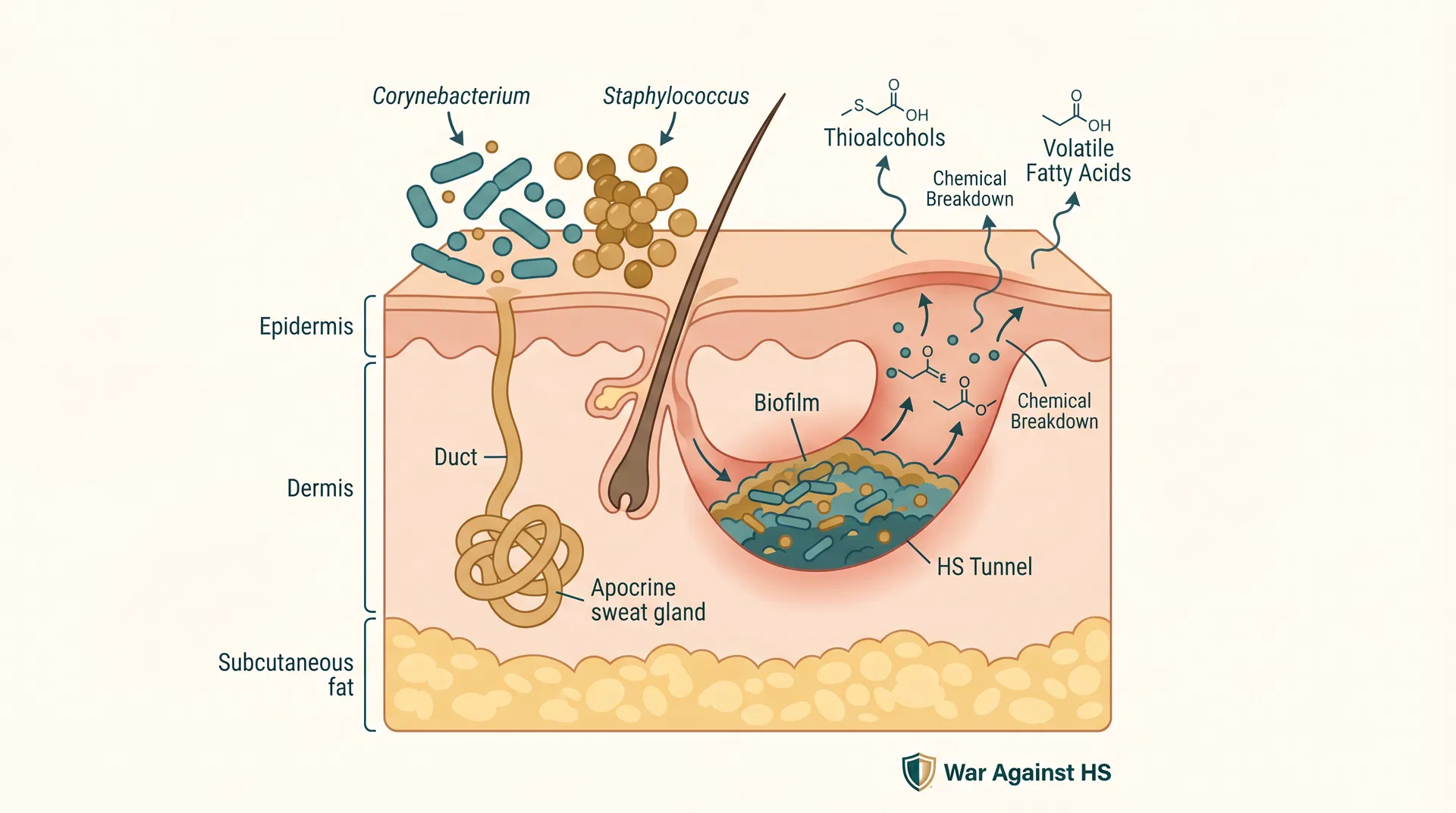
HS odor is not a single symptom with a single cause. There are five distinct mechanisms at work, and they can overlap at any stage of the disease.
Bacterial Colonization of Lesions
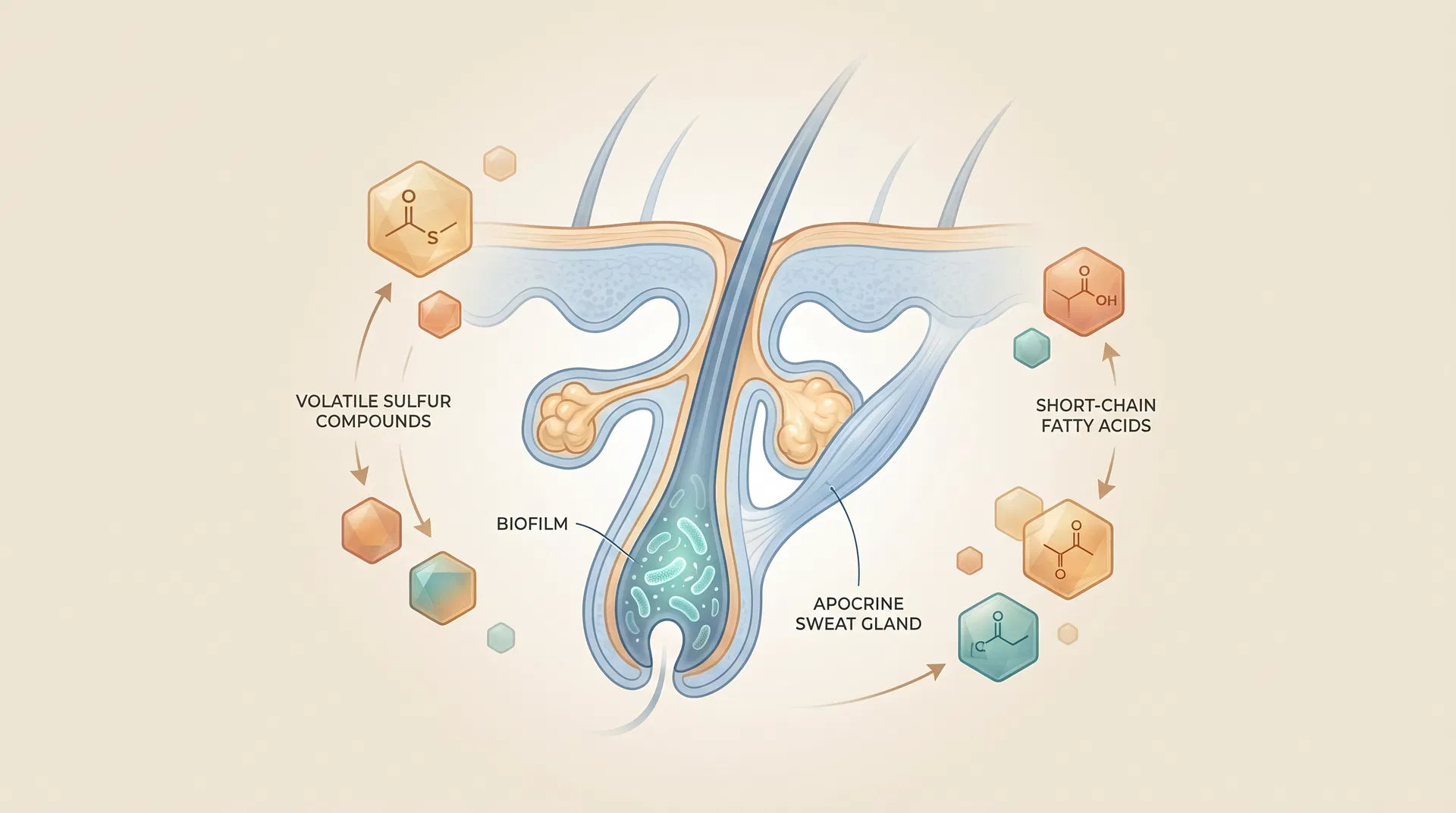
HS lesions are warm, moist, and nutrient-rich environments that bacteria thrive in. Anaerobic bacteria - species that grow without oxygen - are particularly common in HS tunnels (sinus tracts) and produce sulfur-containing compounds as metabolic byproducts. These compounds are responsible for the distinctive, strong odor associated with HS drainage. This is a bacterial process, not a hygiene failure.
Tissue Breakdown During Drainage
When an HS lesion ruptures or drains, it releases a mixture of dead skin cells, immune cells, and inflammatory proteins. As this material breaks down on the skin surface, it produces odor-generating compounds. The longer drainage sits on the skin - particularly in skin folds where it cannot evaporate - the more pronounced the odor becomes.
Apocrine Sweat Gland Dysfunction
HS primarily affects areas rich in apocrine sweat glands - the armpits, groin, and under the breasts. These glands produce a thicker sweat that, when broken down by surface bacteria, creates stronger odor than eccrine (regular) sweat. In HS, the chronic inflammation in these areas disrupts normal gland function and increases the odor-generating activity of the local bacterial community.
Inflammatory Exudate
Active HS lesions produce inflammatory exudate - a fluid containing proteins, immune cells, and cellular debris from the immune response. This exudate has its own odor profile, distinct from bacterial odor, and contributes to the overall smell associated with active flares. Reducing inflammation through treatment directly reduces the production of this exudate.
Trapped Moisture and Friction Zones
HS most commonly affects skin folds where air circulation is poor and moisture accumulates. This warm, moist environment accelerates bacterial growth and prevents drainage from drying naturally. The combination of trapped moisture, bacteria, and drainage creates a self-reinforcing odor cycle that is difficult to manage with surface-level hygiene alone.
The Emotional Weight of HS Odor

You are not alone in this
Research consistently shows that odor is one of the most psychologically distressing aspects of HS. Many patients report avoiding social situations, intimate relationships, and workplace environments because of odor-related anxiety. This is a recognized quality-of-life impact of the disease, not a personal weakness.
- -Social withdrawal and isolation are common responses to HS odor
- -Shame and embarrassment are normal feelings - and they are not your fault
- -Effective treatment of the underlying disease is the most powerful odor intervention
- -Mental health support is a legitimate and important part of HS care
If odor-related anxiety is significantly affecting your daily life, consider speaking with a therapist who has experience with chronic illness. The HS and Depression/Anxiety article covers the mental health dimensions of HS in more detail.
What Odor Patterns Tell You
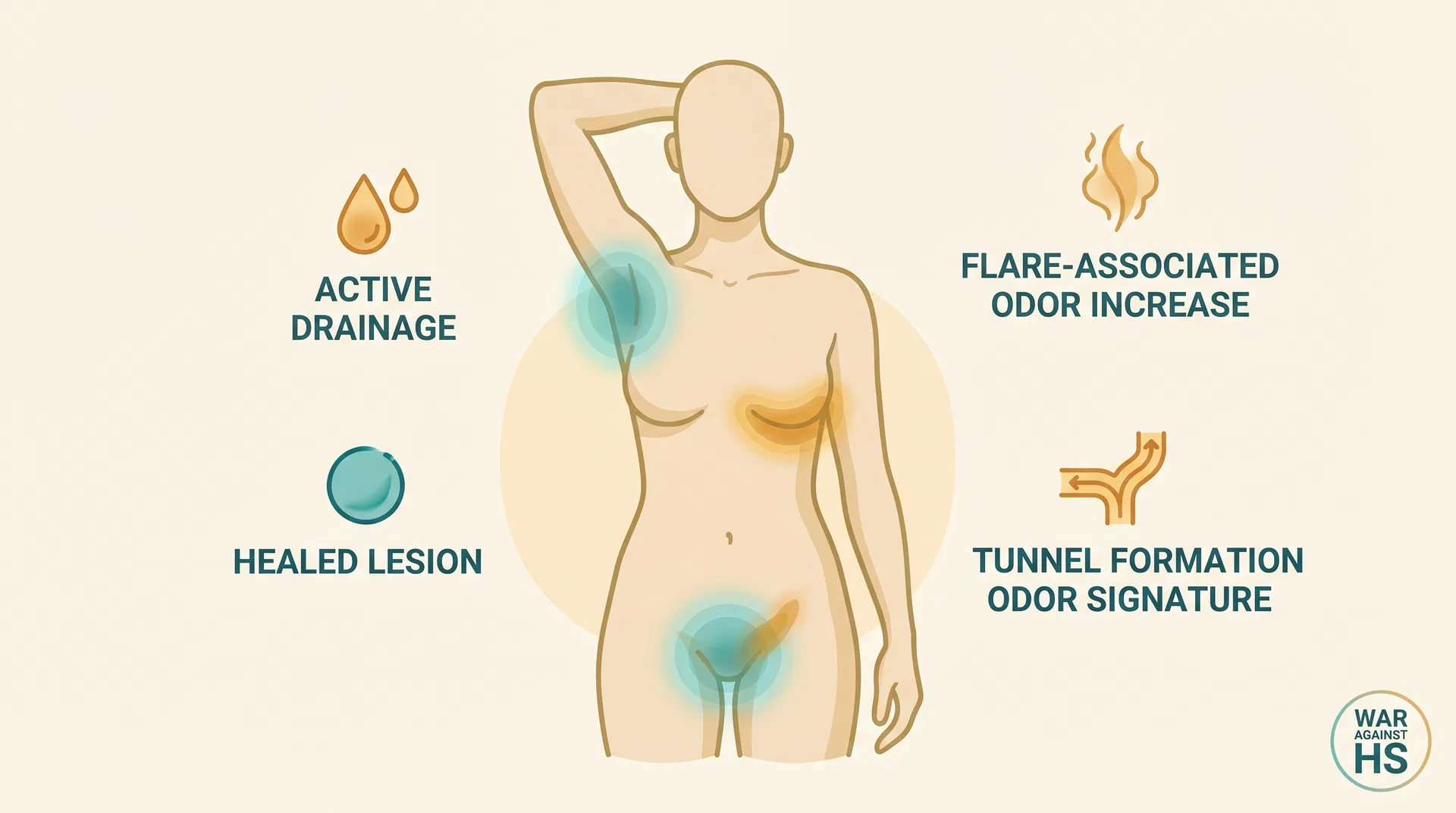
Different odor patterns in HS correspond to different disease states. Learning to read these signals gives you and your dermatologist useful clinical information.
Active drainage
Active FlareA sudden increase in odor often signals that a lesion has ruptured or is actively draining. This is the peak odor phase. Gentle cleansing and an absorbent, non-occlusive dressing can help manage it without worsening the wound.
Chronic low-level odor
Ongoing ActivityPersistent mild odor between flares often indicates ongoing bacterial colonization of sinus tracts or chronic low-grade drainage. This is a sign that the underlying disease is active even when no acute lesion is visible, and may warrant a conversation with your dermatologist about systemic treatment.
Sudden change in odor character
Possible InfectionA change in the smell of drainage - particularly if it becomes sharper, sweeter, or more pungent than usual - can indicate a secondary bacterial infection or a change in the bacterial community in the lesion. This warrants medical evaluation.
Odor after treatment
Treatment ResponseSome patients notice a temporary increase in odor when starting antibiotics or biologics, as the treatment disrupts the established bacterial community in lesions. This is usually temporary and resolves as the treatment takes effect.
How to Control HS Odor
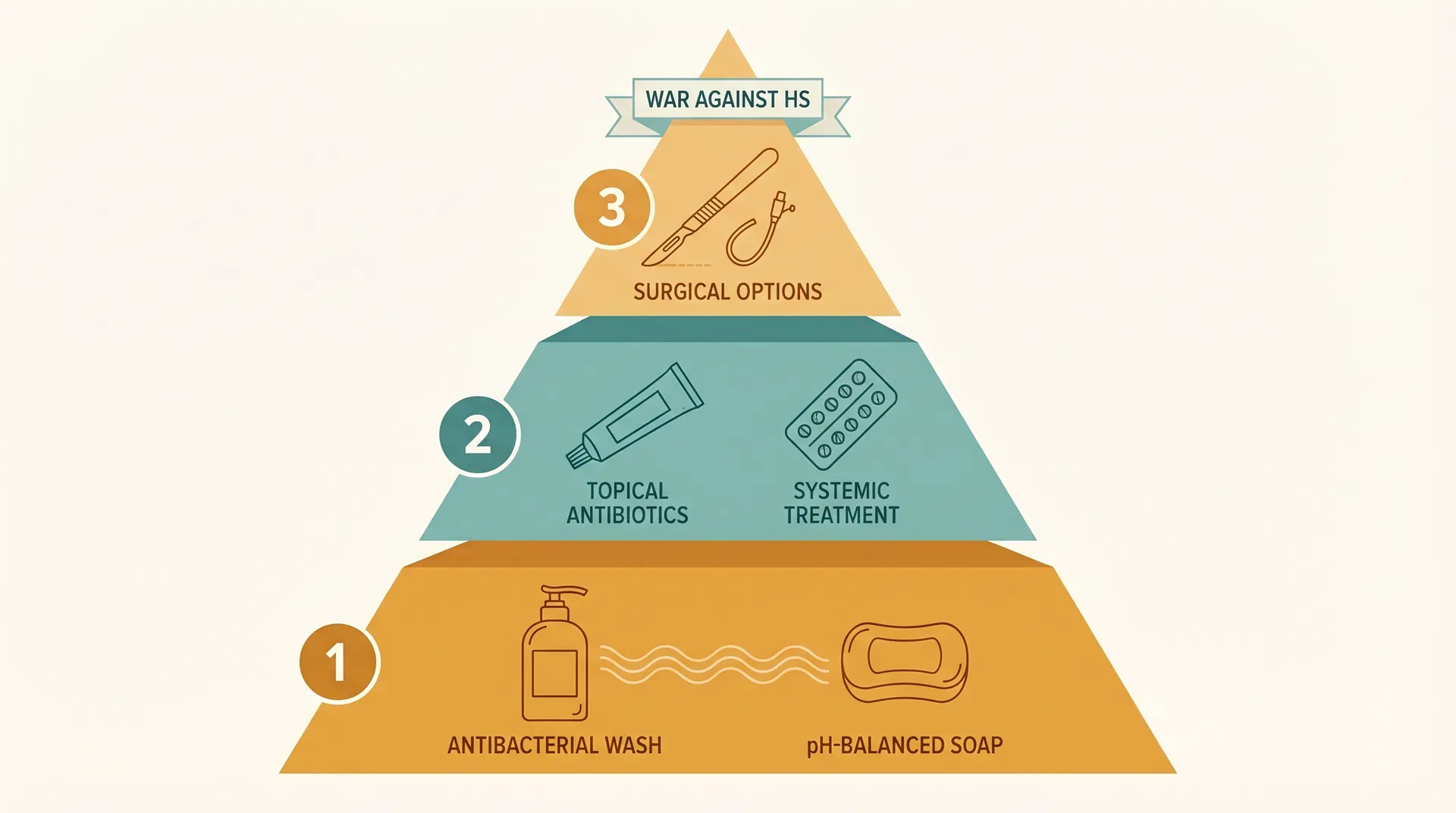
Effective odor management in HS works on three levels: immediate surface management, targeted antibacterial treatment, and addressing the underlying inflammation that creates the conditions for bacterial odor in the first place.
Immediate Management
Targeted Topicals
Root-Level Control
When Odor Is a Warning Sign
Most HS odor is a predictable part of the disease. But some odor changes warrant prompt medical attention. Contact your dermatologist if you notice:
- Sudden dramatic increase in odor with fever or spreading redness: May indicate a secondary bacterial infection (cellulitis) spreading beyond the HS lesion.
- A sweet or fruity odor from drainage: Can indicate Pseudomonas or other opportunistic bacterial infection requiring targeted antibiotic treatment.
- New odor from a previously quiet area: May signal a new sinus tract forming or a previously undetected lesion becoming active.
This content is educational and not a substitute for medical care. Always consult a qualified healthcare provider for diagnosis and treatment of hidradenitis suppurativa.
Continue Learning
Stay Informed on HS Research
Get the latest HS symptom management strategies and treatment updates delivered to your inbox.